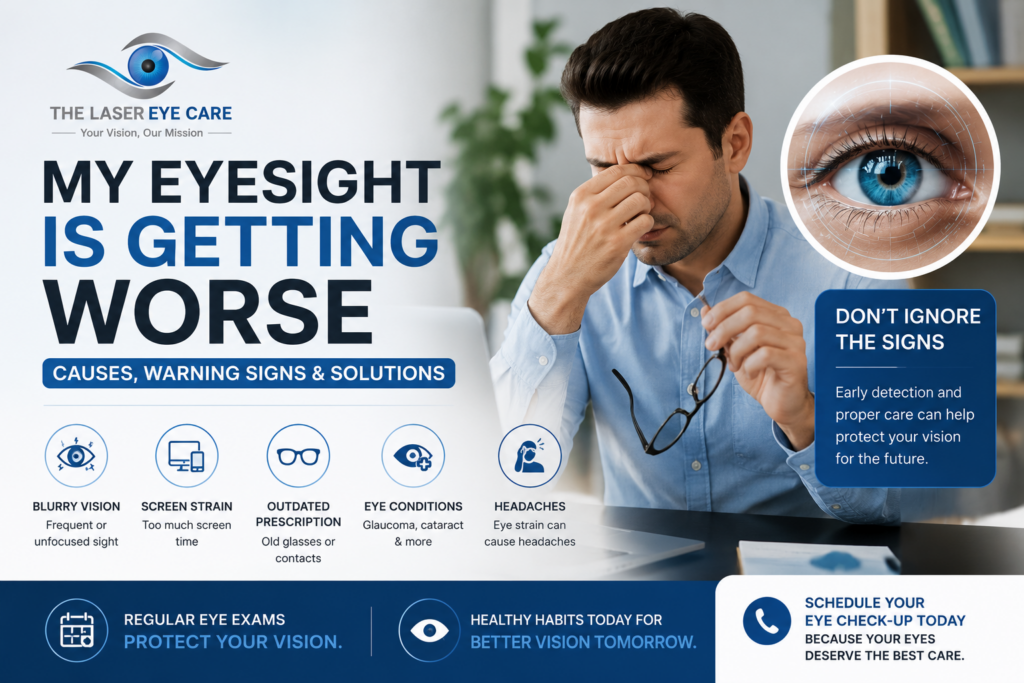
Have you ever caught yourself thinking, “My eyesight is getting worse”? You’re not alone. Millions of people experience gradual changes in their vision every year. Whether it’s struggling to read small text, squinting at distant objects, or experiencing headaches after using screens, worsening eyesight can affect people of all ages.
The good news is that many causes of declining vision can be identified and managed with proper eye care. Understanding why your eyesight is changing is the first step toward protecting your vision for the future.
Why My Eyesight Is Getting Worse
There are several reasons why your vision may not be as clear as it used to be. Some changes occur naturally with age, while others may be linked to lifestyle habits or underlying eye conditions.
Common factors include:
- Age-related vision changes
- Increased screen time
- Uncorrected refractive errors
- Poor eye health habits
- Underlying medical conditions
If you’ve recently noticed changes in your vision, it’s important not to ignore them.
Common Causes of Worsening Vision
1. Digital Eye Strain
Spending hours on phones, laptops, and tablets can cause:
- Blurred vision
- Dry eyes
- Eye fatigue
- Headaches
Following the 20-20-20 rule can help reduce strain: Every 20 minutes, look at something 20 feet away for 20 seconds.
2. Refractive Errors
Conditions such as myopia (nearsightedness), hyperopia (farsightedness), and astigmatism are among the leading causes of poor vision. If your prescription hasn’t been updated in years, your eyesight may appear to be getting worse.
3. Age-Related Changes
As we age, our eyes naturally change. Presbyopia, a condition that makes it difficult to focus on nearby objects, commonly affects adults over 40.
4. Eye Conditions
Several eye diseases can impact your vision, including:
- Cataracts
- Glaucoma
- Diabetic retinopathy
- Macular degeneration
Many of these conditions develop slowly and may not show symptoms in their early stages.
5. Lifestyle Factors
Your daily habits play an important role in maintaining healthy eyesight. Smoking, poor nutrition, lack of sleep, and excessive UV exposure can all contribute to declining vision over time.
Signs Your Eyesight Is Getting Worse
You should schedule an eye examination if you experience:
- Frequent squinting
- Difficulty reading small text
- Blurry vision
- Double vision
- Eye pain
- Increased sensitivity to light
- Trouble driving at night
- Frequent headaches
Early diagnosis can help prevent further complications and improve treatment outcomes.
How to Prevent Vision From Getting Worse
While not all vision changes can be prevented, there are several ways to support long-term eye health:
- Get regular eye examinations.
- Wear sunglasses with UV protection.
- Eat foods rich in Vitamins A, C, and Omega-3.
- Stay hydrated.
- Limit screen time when possible.
- Follow the 20-20-20 rule.
- Avoid smoking.
- Get enough sleep each night.
Small lifestyle changes can make a significant difference in protecting your eyesight.
When to See an Eye Specialist for Worsening Vision
You should seek professional advice immediately if you experience:
- Sudden vision loss
- Flashes of light
- A large number of floaters
- Severe eye pain
- Persistent blurry vision
Prompt medical attention can help identify serious conditions before they become more difficult to treat.
Protect Your Eyesight for the Future
Your eyesight is one of your most valuable assets. If you’ve been thinking, “My eyesight is getting worse,” don’t ignore the signs. Regular eye checkups and healthy habits can go a long way in preserving your vision.
At The Laser Eye Care, we’re committed to helping patients maintain healthy eyesight through comprehensive eye examinations and advanced eye care services. Whether you’re experiencing changes in your vision or simply due for a routine checkup, our team is here to help.
Final Thoughts
If your eyesight seems to be getting worse, remember that you’re not alone—and there are solutions available. Taking action today could help protect your vision for years to come.