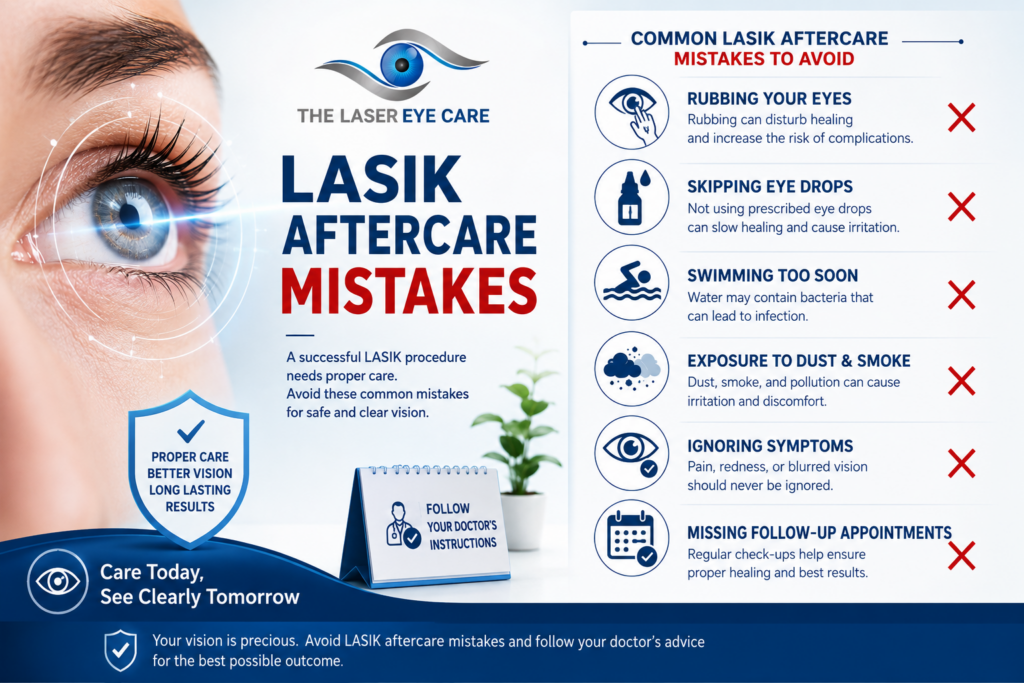
LASIK aftercare mistakes can affect your recovery even when the surgery itself is successful. After LASIK, your eyes need time to heal, and following your surgeon’s instructions carefully is an important part of protecting your vision. Simple mistakes such as rubbing your eyes, skipping prescribed eye drops, swimming too soon, or missing follow-up appointments may increase the risk of complications
Common LASIK Aftercare Mistakes to Avoid
Yes, complications can occur after any medical procedure, but some post-LASIK problems may be linked to poor aftercare or ignoring medical advice.
Patients may feel that their vision is already clear and assume that their eyes have completely healed. However, the eyes continue to recover during the weeks and months following LASIK. Carelessness during this period can increase the risk of irritation, infection, inflammation, delayed healing, or other complications.
1. Rubbing Your Eyes After LASIK
One of the most important things to avoid after LASIK is rubbing your eyes.
Even if your eyes feel itchy or uncomfortable, rubbing can interfere with healing and potentially damage the delicate corneal surface. If you experience persistent itching, pain, redness, or discomfort, contact your eye care professional instead of rubbing your eyes.
2. Ignoring Prescribed Eye Drops
After LASIK, your surgeon may prescribe specific eye drops to support healing and reduce the risk of complications.
Skipping doses, using drops incorrectly, or stopping them earlier than advised can affect recovery. Always follow your surgeon’s instructions regarding which drops to use, how often to use them, and when to stop.
3. Returning to Dusty or Dirty Environments Too Quickly
Dust, smoke, and other irritants can make the eyes uncomfortable during recovery. Patients should follow their surgeon’s advice regarding when it is safe to return to environments that may expose the eyes to dust or other particles.
Protecting your eyes during the early recovery period can help maintain a comfortable healing process.
4. Swimming Before Your Doctor Allows It
Swimming pools, hot tubs, lakes, and other bodies of water can expose recovering eyes to microorganisms and irritants.
Avoid swimming until your eye surgeon confirms that it is safe. This simple precaution can help reduce the risk of infection during recovery.
5. Missing Follow-Up Appointments
Follow-up visits are an important part of LASIK aftercare.
Even if your vision feels excellent, your doctor needs to check how your eyes are healing. These appointments allow potential problems to be detected early and ensure that your recovery is progressing as expected.
6. Using Eye Makeup Too Soon
Eye makeup can introduce particles or bacteria around the eyes. Patients should follow their surgeon’s specific instructions about when they can safely resume using eyeliner, mascara, and other cosmetics.
It is better to wait than to risk unnecessary irritation during the healing period.
7. Ignoring Symptoms
Clear vision after LASIK is encouraging, but patients should not ignore unusual symptoms.
Increasing pain, significant redness, discharge, worsening vision, severe light sensitivity, or other concerning changes should be reported to your eye doctor promptly.
Do not assume that a problem will disappear on its own.
Your Role Matters After LASIK
LASIK technology and surgical expertise play an important role in achieving good results, but patient aftercare matters too.
Think of LASIK recovery as a partnership between you and your eye surgeon. Your doctor provides the treatment and instructions; your responsibility is to follow those instructions carefully.
The Bottom Line
A successful LASIK procedure does not mean you can immediately return to every normal activity. Your eyes need time to heal, and careless habits during recovery can increase the risk of complications.
If you are considering LASIK, choose a qualified eye-care professional, attend all recommended follow-ups, use medications exactly as prescribed, and ask your surgeon before returning to activities that may affect your recovery.
Your clear vision is worth protecting.
This article is for general educational purposes and does not replace personalized medical advice from an eye-care professional.