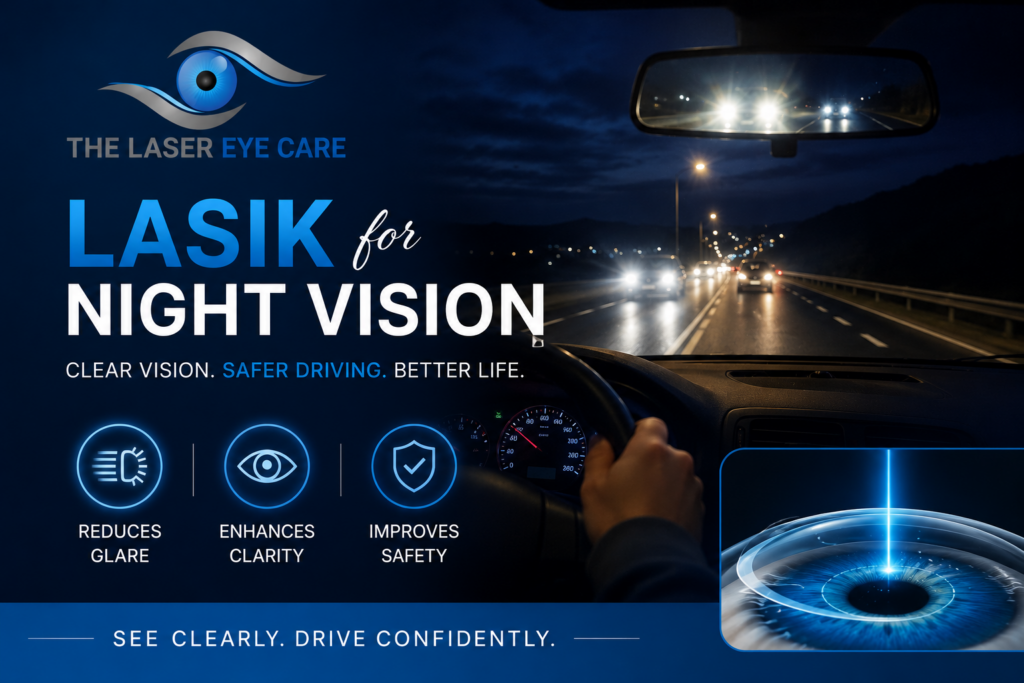
Driving at night can be challenging, especially if you struggle with blurry vision, glare from headlights, or difficulty seeing road signs. While glasses and contact lenses help many people achieve clear vision, they may not always provide the comfort or convenience drivers want after dark. For eligible candidates, LASIK eye surgery can reduce dependence on corrective lenses and provide sharper vision, making night driving more comfortable.
Why Is Night Driving More Difficult?
Low-light conditions naturally make it harder for the eyes to see details. At night, your pupils dilate to let in more light, which can make vision imperfections more noticeable. Common challenges include:
- Blurred vision
- Glare from oncoming headlights
- Halos around lights
- Difficulty reading road signs
- Reduced contrast sensitivity
If you already have nearsightedness, astigmatism, or another refractive error, these issues can become even more noticeable during nighttime driving.
How LASIK Improves Vision
LASIK (Laser-Assisted In Situ Keratomileusis) is a laser vision correction procedure that reshapes the cornea to improve how light focuses on the retina. It can effectively treat:
- Nearsightedness (Myopia)
- Farsightedness (Hyperopia)
- Astigmatism
By correcting these refractive errors, LASIK often provides clearer, sharper vision without the need for glasses or contact lenses.
Benefits of LASIK for Night Driving
1. Sharper Vision
Many patients achieve 20/20 vision or better after LASIK, making it easier to identify road signs, lane markings, and pedestrians in low-light conditions.
2. Reduced Dependence on Glasses
Glasses can fog up or become wet during bad weather, while contact lenses may dry out during long drives. LASIK can reduce or eliminate the need for corrective eyewear for many people.
3. Better Confidence Behind the Wheel
When your vision is clear, driving at night often feels more comfortable and less stressful, especially on unfamiliar roads.
4. Improved Everyday Convenience
Clear vision isn’t just helpful for driving. LASIK can also make evening activities such as walking, traveling, and attending events more convenient.
Can LASIK Eliminate Night Glare?
Not always. While many patients notice improved vision after LASIK, some experience temporary glare, halos, or starbursts around lights during the healing period. These symptoms usually improve over time, but in some cases they may persist. Your eye surgeon will evaluate your eyes and discuss the potential benefits and risks before recommending the procedure.
Who Is a Good Candidate?
You may be a good candidate for LASIK if you:
- Are at least 18 years old
- Have a stable vision prescription
- Have healthy eyes and sufficient corneal thickness
- Do not have certain eye conditions that may affect healing
A comprehensive eye examination is the best way to determine if LASIK is right for you.
Tips for Safer Night Driving
Whether you’ve had LASIK or not, these habits can improve nighttime safety:
- Keep your windshield clean.
- Use anti-reflective lenses if you wear glasses.
- Avoid looking directly at oncoming headlights.
- Keep your headlights properly aligned.
- Schedule regular eye examinations to ensure your vision remains healthy.
Final Thoughts
If driving at night has become difficult because of blurry vision or refractive errors, LASIK may help you achieve clearer vision and reduce your dependence on glasses or contact lenses. While results vary from person to person and some patients experience temporary night vision symptoms during recovery, many people enjoy sharper eyesight and greater confidence on the road after the procedure.
The best way to know if LASIK is suitable for you is to schedule a comprehensive consultation with an experienced eye care professional. They can assess your eye health, explain the expected outcomes, and help you make an informed decision about your vision correction options.