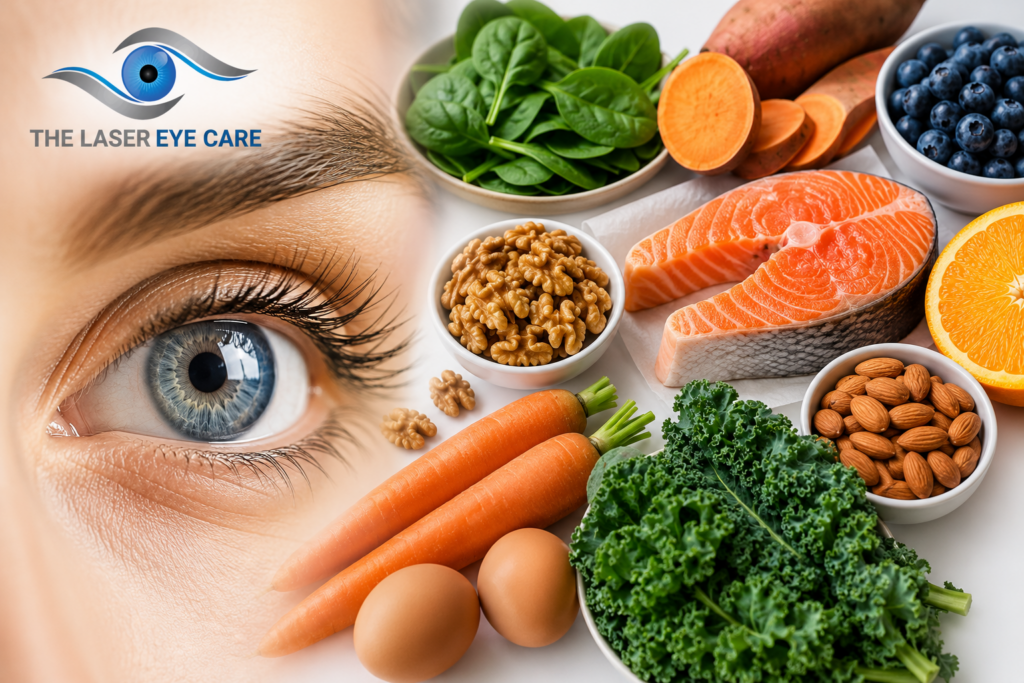
Foods that help keep your eyes healthy are more important than many people realize. The nutrients you eat every day can support your vision, protect your eyes from age-related damage, and help reduce the risk of common eye conditions. By adding the right foods to your diet, you can take a simple but effective step toward maintaining healthy eyesight for years to come.
1. Leafy Green Vegetables
Spinach, kale, collard greens, and Swiss chard are packed with lutein and zeaxanthin—two powerful antioxidants that accumulate in the retina. These nutrients help filter harmful blue light and protect the eyes from oxidative damage.
Regularly eating leafy greens may help reduce the risk of age-related eye conditions and support long-term visual health.
Easy ways to enjoy them:
- Add spinach to smoothies.
- Toss kale into salads.
- Stir greens into soups or omelets.
2. Fatty Fish
Salmon, sardines, tuna, and mackerel are excellent sources of omega-3 fatty acids, particularly DHA, an important structural component of the retina.
Omega-3s may help:
- Support tear production.
- Reduce symptoms of dry eyes.
- Promote healthy retinal function.
Aim for two servings of fatty fish each week for the greatest benefit.
3. Carrots
Carrots have long been associated with healthy vision, and for good reason. They contain beta-carotene, which the body converts into vitamin A.
Vitamin A helps:
- Maintain the surface of the eye.
- Support night vision.
- Keep the cornea healthy.
While carrots alone won’t improve eyesight overnight, they’re an excellent part of an eye-friendly diet.
4. Eggs
Eggs are a nutritional powerhouse for eye health.
The yolk contains:
- Lutein
- Zeaxanthin
- Vitamin A
- Zinc
Together, these nutrients help protect the retina and support healthy vision as you age.
Enjoy boiled eggs, omelets, or vegetable scrambles for a protein-rich meal.
5. Citrus Fruits
Oranges, lemons, grapefruits, and limes are rich in vitamin C, an antioxidant that helps protect the tiny blood vessels in your eyes.
Vitamin C also supports collagen production, which contributes to the health of the cornea and other eye tissues.
Fresh fruit is generally the best choice, but freshly squeezed juice in moderation is another option.
6. Nuts and Seeds
Almonds, walnuts, sunflower seeds, flaxseeds, and chia seeds provide vitamin E, healthy fats, and additional omega-3 fatty acids.
Vitamin E helps protect eye cells from damage caused by free radicals and supports overall eye health.
A small handful of mixed nuts makes an easy and nutritious snack.
7. Sweet Potatoes
Sweet potatoes are another excellent source of beta-carotene and are also rich in vitamins C and E.
Their combination of nutrients supports:
- Healthy vision.
- Immune function.
- Protection against oxidative stress.
Bake, roast, or mash them for a delicious side dish.
Bonus Tips for Healthy Eyes
Eating well is only one part of maintaining healthy vision. Consider these daily habits as well:
- Wear sunglasses with UV protection outdoors.
- Take regular breaks from digital screens using the 20-20-20 rule.
- Stay hydrated throughout the day.
- Get enough sleep to allow your eyes to recover.
- Avoid smoking, which increases the risk of several eye diseases.
- Schedule routine comprehensive eye examinations.
Can Food Improve Your Eyesight?
Healthy foods for your eyes is helpful but no single food can cure vision problems or replace medical treatment. If you already have refractive errors such as nearsightedness, farsightedness, or astigmatism, you’ll still need appropriate vision correction and regular eye care.
Think of nutritious foods as long-term protection for your eyes rather than a quick fix.
The Bottom Line
Healthy vision starts with healthy habits—and that includes what’s on your plate. By incorporating leafy greens, fatty fish, carrots, eggs, citrus fruits, nuts, seeds, and sweet potatoes into your meals, you provide your eyes with essential nutrients that support clear vision and long-term eye health.
Small dietary changes made today can contribute to healthier eyes for years to come. Pair a balanced diet with regular eye checkups, good screen habits, and an active lifestyle to give your vision the care it deserves.