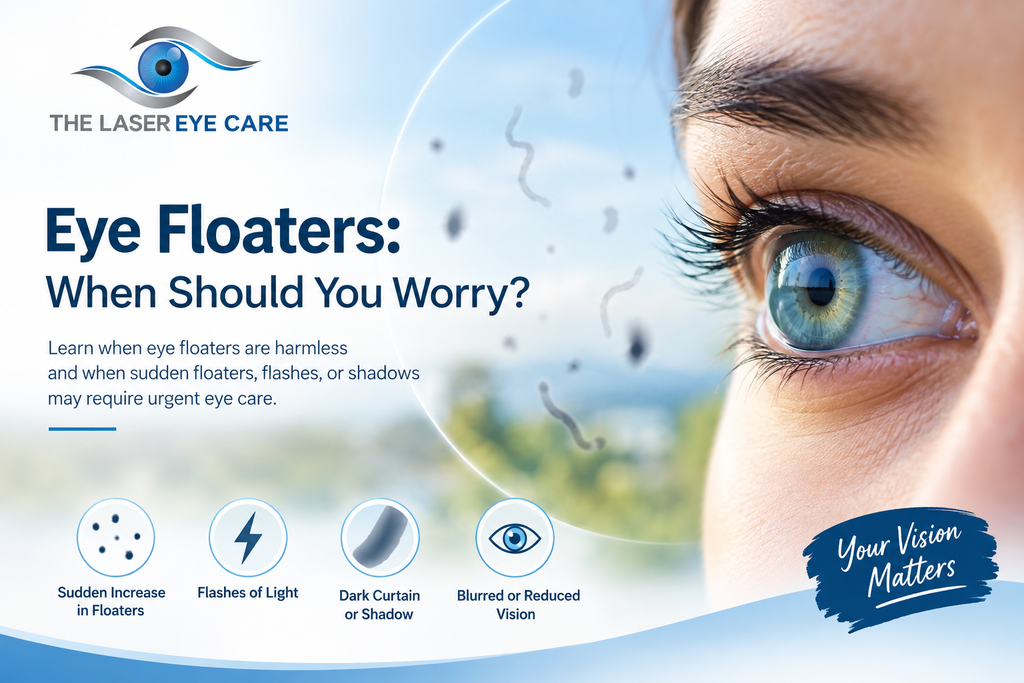
Eye floaters are tiny spots, lines, cobwebs, or shadows that seem to move across your vision. They are common and often harmless, especially as we get older. However, if you suddenly notice many new floaters, flashes of light, or a dark curtain over your vision, it could be a warning sign of a more serious eye problem.
What Are Eye Floaters?
Eye floaters are small shapes that appear to move through your field of vision. They can look like:
- Tiny black dots
- Threads or strings
- Cobwebs
- Rings
- Small shadows
- Squiggly lines
They are not usually something on the surface of your eye. Instead, they are often caused by tiny structures or clumps within the vitreous, the clear, gel-like substance inside the eye.
When light enters your eye, these structures can cast shadows onto the retina, making them appear as moving spots or shapes.
Why Do Floaters Happen?
One of the most common reasons for eye floaters is the natural aging process.
As we get older, the vitreous gel inside the eye gradually changes. It can become more liquid and pull away from the retina. This process can cause new floaters to appear.
Floaters can also be associated with:
- Nearsightedness
- Eye injuries
- Inflammation inside the eye
- Previous eye surgery
- Changes in the vitreous gel
- Retinal problems
Most floaters are not dangerous. However, the way they appear can matter.
When Are Eye Floaters Normal?
If you have had a few small floaters for a long time and they have not changed significantly, they are often less concerning.
You may notice them more when looking at something bright, such as:
- A clear blue sky
- A white wall
- A bright computer screen
Over time, your brain may become better at ignoring them, so they may become less noticeable.
But that doesn’t mean every new floater should be ignored.
🚨 When Should You Worry About Eye Floaters?
A sudden increase in floaters deserves attention.
You should seek an urgent eye examination if you suddenly notice:
1. A sudden shower of new floaters
Seeing many new dots, spots, or cobweb-like shapes all at once can sometimes be associated with changes in the vitreous or a retinal tear.
2. Flashes of light
If you suddenly start seeing flashes, especially in the corner of your vision, don’t simply assume they are harmless.
Flashes can occur when the vitreous pulls on the retina.
3. A dark curtain or shadow
This is one of the most important warning signs.
If a dark curtain, veil, or shadow appears across part of your vision, seek emergency eye care immediately.
It can be a sign of retinal detachment, which can permanently threaten vision if treatment is delayed.
4. Sudden blurry or reduced vision
New floaters accompanied by sudden changes in vision should be evaluated promptly by an eye specialist.
5. Floaters after an eye injury
If floaters appear following trauma to the eye or head, an eye examination is important because injuries can sometimes damage the retina.
Can Eye Floaters Be Treated?
Treatment depends on the underlying cause.
If the floaters are harmless and your retina is healthy, treatment may not be necessary. Many people eventually become less aware of them.
However, if floaters are caused by a retinal tear or another eye condition, treatment may be required.
In certain severe cases, procedures may be considered to remove or reduce visually disturbing floaters. These decisions depend on the patient’s eye health, symptoms, risks, and expected benefits.
The important thing is not to diagnose the cause yourself.
A comprehensive eye examination can help determine whether the floaters are simply an age-related change or something that requires treatment.
What Should You Do If You Suddenly See Floaters?
Don’t panic—but don’t ignore sudden changes either.
If you suddenly develop many new floaters, flashes of light, a curtain-like shadow, or a significant change in vision, arrange an urgent eye examination.
The retina is a delicate part of the eye, and some retinal problems can progress without obvious pain.
Your Vision Deserves Attention
Seeing an occasional floater does not automatically mean something is wrong.
But when your vision suddenly changes, timing matters.
Knowing the warning signs can help you recognize when a routine eye concern may actually require urgent medical attention.
If you’re experiencing new or worsening floaters, flashes, shadows, or changes in vision, consult an eye-care professional for an appropriate examination.Don’t wait for a vision problem to become permanent before taking it seriously.